It started with a free robotics kit and a group of curious students keen to give it a try.
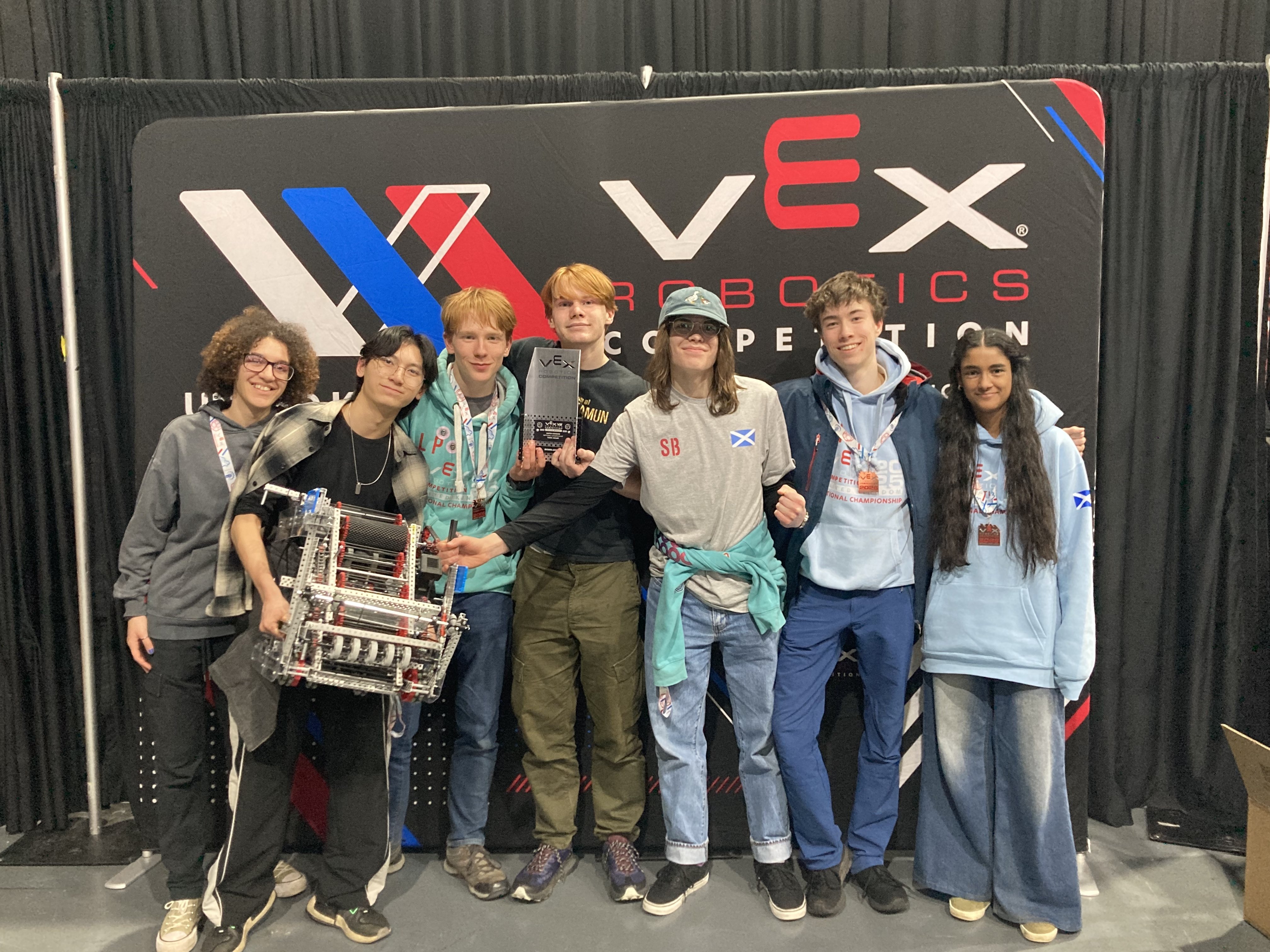
Now, Thistle Robotics are getting ready to represent Scotland at the VEX Robotics World Championship in the US after winning the Think Award for outstanding programming at the UK national finals, securing their place at the global competition.
Behind that achievement is months of work, long evenings after school and a level of commitment that goes far beyond the classroom.
At Grant McGregor, we're proud to be supporting the team on their journey to the world stage as one of their Hearty Sponsors.
We spoke with Leander Patterson, Team Manager at Thistle Robotics, to hear how it all started, the work that's gone into getting this far and what it would mean for the team to compete on the world stage.
Built from the ground up
Thistle Robotics didn't come from a long-established programme or a well-funded setup.
The team started just a few years ago, after being introduced to robotics through a school initiative. From there, they built everything themselves, from securing parts and equipment to developing their robot and learning how to compete at a national level.
"We've done this all ourselves," says Leander, the team manager. "We bought the parts, built the robot, worked out the best way to do things – and kept improving as we went."
That journey hasn't been straightforward. Many competing teams have years of experience, established support systems and more resources. For Thistle Robotics, it's been about figuring things out as they go, testing, adjusting and improving each time.
Long evenings, setbacks and persistence
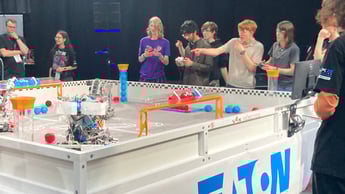 What does it actually take to compete at this level?
In the early stages, it meant a few sessions a week. But as competitions approached, that quickly changed.
"Over the last few months, it’s been pretty much every day after school," Leander explains. "We'd finish at 3:40 and often stay until 7 or 8."
And that's just the technical side.
Alongside building and programming the robot, the team has also been responsible for raising the funds needed to compete, from emailing businesses and organising events to managing logistics and travel planning.
There have been plenty of setbacks along the way, from parts breaking and designs not working to emails going unanswered.
But that's part of the process. "If something doesn't work, we try something else," Leander says. "You take a break, come back to it and keep going."
What set them apart
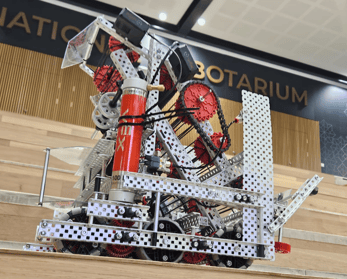 At the UK national finals, it became clear Thistle Robotics were doing something differently.
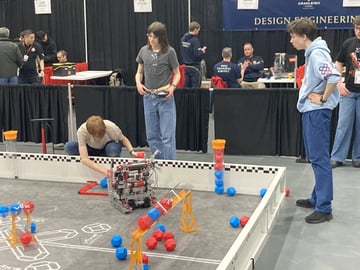
Their robot featured a unique mechanism designed to improve precision during matches, alongside advanced programming that allowed for consistent, accurate performance.
But winning the Think Award wasn't just about the robot itself.
It also came down to how well the team could explain their thinking, document their process and demonstrate their understanding during interviews with judges.
"We spent a huge amount of time on our engineering notebook and preparation," Leander says. "When we were shortlisted for a second interview, that's when we realised we had a real chance."
More than just robotics
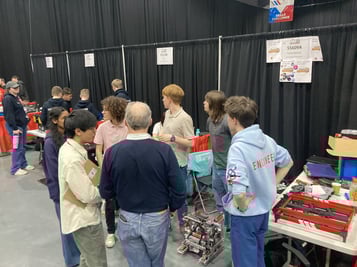 While the competition is centred around engineering and coding, the impact goes much further.
Every member of the team has developed skills beyond the technical side, from teamwork and communication to confidence and problem-solving.
"We work a lot better together now than we did at the start," Leander explains. "And the confidence we've gained – just knowing we can do this – that’s huge."
For some students, this experience is shaping their future paths, with several planning to study computing science at university.
For others, it's something they can talk about in interviews and a strong example of what they've achieved outside of school.
Getting to the world finals
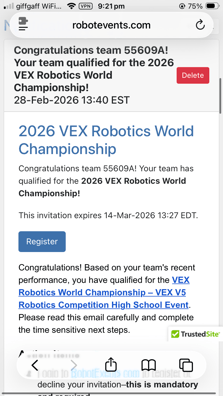 Qualifying for the world finals is a huge achievement. Getting there is another challenge.
The team has had just a few weeks to raise around £14,000 to cover flights, accommodation, competition fees and equipment.
"It's been really difficult," Leander says. "Most of my time recently has been spent trying to find new ways to raise funds and reach people."
Despite the pressure, the support they’ve received has made a big difference.
"Local businesses have been incredibly helpful," he adds. "You can actually speak to people, build a relationship and share what you're doing."
How support like this helps
Support from businesses and the wider community helps the team get there and gives these students experience they'll carry forward.
"These experiences make a real difference," Leander says. "In a few years, these students will be entering the workforce. Supporting something like this is an investment in the future."
At Grant McGregor, we're proud to support Thistle Robotics and the people behind it.
The final step to the world stage
With the world finals approaching, the team is getting close to their funding target.
Getting there would be the result of months of work, long evenings and everything they've put into this so far.
"It would mean a lot to represent Scotland," Leander says. "To show that we're capable of doing something on a global stage."
For a group that started as a small school club, they’ve already proven they can compete at a national level.